These are the questions international patients actually ask before rhinoplasty in Turkey, answered plainly by a practising nose surgeon — grouped by what you are trying to decide. Each answer links to a full guide where there is more worth knowing. If you only read one section, make it Safety and choosing a surgeon: it is the decision that determines everything else.
Cost and Value
How much does rhinoplasty cost in Turkey?
All-inclusive Istanbul packages typically run €2,500–€5,500, covering surgery, hospital, anaesthesia, medication, transfers and follow-ups. For comparison, the NHS gives a UK range of £4,000–£7,000 and the American Society of Plastic Surgeons puts the average US surgeon’s fee at $7,637 before anaesthesia and facility costs. Convert at the day’s rate and add travel before comparing totals — see the cost guide and the UK comparison.
What should an all-inclusive package actually include?
A named surgeon in writing, a full-service hospital, a staff anaesthetist, all medication and dressings, transfers, scheduled follow-ups and a written revision policy. What it usually excludes: flights, extra hotel nights, and additional procedures discovered at examination. The package guide lists both sides in full.
Why is it cheaper in Turkey?
Lower hospital, staffing and living costs — not lower standards. A dedicated nose surgeon in Istanbul may operate on more noses in a month than some Western practices see in a year. A price far below the typical range is the one to question, not the range itself.
Safety and Choosing a Surgeon
Is rhinoplasty in Turkey safe?
Safety belongs to the surgeon and the hospital, not to the country. Turkey has university-trained surgeons and modern accredited hospitals; it also has low-cost operators cutting corners, as every high-volume destination does. Vet any clinic anywhere with the same seven-point checklist.
Who exactly will operate on me?
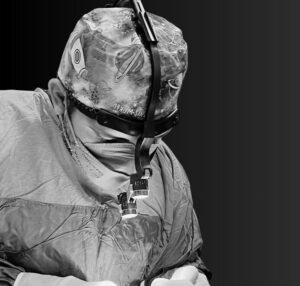
Here, Op. Dr. Berkay Çaytemel personally — an ENT and head & neck surgery specialist with rhinology training at Stanford, whose academic record is public on his Istanbul University profile. He manages the case from first photograph to final follow-up. Ask any clinic this question and insist on the answer in writing: meeting a different surgeon on the day is the most common complaint in package medicine.
Should I choose an ENT surgeon or a plastic surgeon?
Both specialties perform rhinoplasty well. If you have breathing problems, a deviated septum or a previous nose operation, an airway-focused (ENT) background is an advantage; otherwise, the individual surgeon’s rhinoplasty experience matters most. See ENT surgeon or plastic surgeon for rhinoplasty.
What are the warning signs I should walk away from?
A quote given without seeing your photographs, no named surgeon, pressure to decide today, guaranteed results, no written revision policy, and surgery in an office theatre rather than a full-service hospital. Any one of these is worth pausing over.
The Operation
Does it hurt?
Not during surgery — you are under general anaesthesia. Afterwards most patients describe congestion and pressure rather than pain, typically 2 to 4 out of 10 on the first night and settling within days. The packing horror stories belong to a technique no longer in routine use. Full detail in the pain guide.
Open or closed technique — which will I need?
Whichever your anatomy calls for. Closed leaves no visible scar and suits straightforward reshaping; open gives direct vision for complex tips, crooked noses, grafting and most revisions. Neither is better in general — the comparison sets out which case suits which.
Can my breathing be fixed in the same operation?
Yes, and it usually should be if you have both concerns. A septorhinoplasty addresses the septum, the turbinates, the nasal valves and the external shape in one anaesthetic and one recovery. Cartilage removed from a deviated septum often becomes the graft material for the reconstruction.
Will you use implants?
No. Where a bridge needs raising or a tip needs support, your own cartilage — septal, ear or rib — integrates with your tissue. Silicone and other synthetic implants can shift, become infected or extrude years later.
Does rhinoplasty change your voice?
Usually not in a way other people notice. Your voice is produced in the larynx; the nose only shapes its resonance. Measurements after nasal surgery can show small changes in nasal resonance — often a slightly less “blocked” sound when breathing improves — that most people do not perceive. If you sing or use your voice professionally, mention it at consultation.
Am I too old, or too young?
The minimum is completed nasal growth, roughly 17–18. There is no maximum — general health decides, not the calendar. The age guide goes through it by decade.
Recovery and Travel
How long do I need to stay in Istanbul?
Seven days as a minimum, eight with a buffer: arrival, surgery, discharge, four quiet recovery days, then splint removal and flight clearance. The day-by-day plan covers each day, and the planning guide covers hotels, packing and insurance.
How long is recovery?
Desk work in 7–10 days, gym at four to six weeks, and the final refined result at around twelve months — longer with thick skin. Most of what worries people in the first three months is swelling. The week-by-week timeline sets out what changes when.
When can I fly home?
Normally day seven, after the splint is off and you have been cleared. Cabin pressure is not the danger people imagine; the reason to wait is that the first week carries the highest risk of problems and that is when you want to be near your surgeon. See the flying guide.
What happens once I am home?
You will be at home for eleven and a half of the twelve months it takes your nose to settle, so aftercare matters more than the hotel did. Establish before you fly out — in writing — who you contact, on which channel, at what hours, and what the follow-up schedule is.
Results and Revision
Will people be able to tell I had surgery?
The goal is the opposite: a nose that suits your face well enough that people notice you look well rather than that you had work done. This is the whole principle behind planning around your own anatomy instead of a template.
When can I judge the result?
At twelve months, and eighteen for thick skin or revision cases. The bridge settles within weeks; the tip is always last. This is also why no responsible surgeon discusses revision before the twelve-month mark.
Can I see before-and-after photos?
Cases with anatomy comparable to yours are reviewed during consultation rather than published as a public gallery — a matter of patient consent and of Turkish health-advertising rules. More useful anyway: the only result that predicts yours is a nose that started like yours. How to read before-and-after photos explains what to look for.
What happens 20 years after rhinoplasty?
The nose keeps ageing with the rest of the face. Over decades the skin thins, the tip tends to drop slightly as its supporting tissues weaken, and the bridge can look a little more defined. A rhinoplasty that preserves and supports the nose’s structure usually ages naturally with the face; problems seen many years later are more often linked to over-reduction or weak tip support at the original operation.
What if I had a bad nose job elsewhere?
Revision is a core part of this practice, including airway reconstruction. Bring your operative report if you have it — what was actually done changes the plan substantially. See how revision works and how to tell a real problem from swelling.
What if I need a touch-up afterwards?
Ask for the revision policy in writing before you pay a deposit — here and anywhere else. Minor refinements are sometimes possible with a limited procedure; that is what an honest assessment at twelve months determines.
Getting Started
How do I get answers about my own nose?
Generic articles take you only so far. Send photographs — front, true profile and base view — on WhatsApp for a personal assessment, including an honest view on whether surgery is the right choice for you at all, and an itemised written quote.
References & further reading
Written and medically reviewed by Op. Dr. Berkay Çaytemel. External sources are provided for general medical background and do not replace a personal consultation.
- NHS — Nose reshaping (rhinoplasty)
- American Society of Plastic Surgeons — Rhinoplasty average cost
- American Society of Plastic Surgeons — Rhinoplasty
- American Academy of Facial Plastic and Reconstructive Surgery (AAFPRS)
- Cleveland Clinic — Rhinoplasty
- Op. Dr. Berkay Çaytemel — Istanbul University academic profile (AVESIS)
- Op. Dr. Berkay Çaytemel — ResearchGate profile
Wondering what would suit your nose?
Send your photos on WhatsApp and get a free personal assessment from Op. Dr. Berkay Caytemel.
Free WhatsApp Consultation